
Each year students in the higher levels of foreign language classes are able to take the Seal of Biliteracy exam. This test determines their fluency and proficiency in the language they’re learning. The test consists of four different sections: listening, speaking, reading and writing.
Each section of the test is graded separately. There are novice scores which are N1, N2, N3, and N4. Intermediate levels which are I1, I2, I3, I4, and the advanced range, A1. Students must receive at least an I3 on each section of the Seal of Biliteracy test to pass.
The foreign language teachers at St. Charles High work very hard to make sure that each of their students has the tools and the information they need to take the test. There are many ways that they ensure their students are prepared.
“We prepare for the test from August until February when you take the test,” French teacher Anna Schrader. “We practice in class by writing essays, speaking in groups, and reading the newspaper.”
Spanish teacher Laura Lopez Reese said she helps her students through extensive demo practices to learn the format of the exam. She engages in practice during class time and she offers practices during AIP and after school.
“The topics of the exam are part of our curriculum. These are lessons that are naturally taught starting in level 1 and continuing to level AP5,” Reese said.
Some students take the test after only learning their language in school, but other students have more experience.
“If I’m being honest the seal is just for validation when it comes to people who have learned their second language since childhood,” senior Rosaisela Cordero-Sanchez said. “It’s kinda just like a ‘ha I still know both of my languages and can communicate’ but for others it’s a good opportunity to further their skills or use it in the future.”
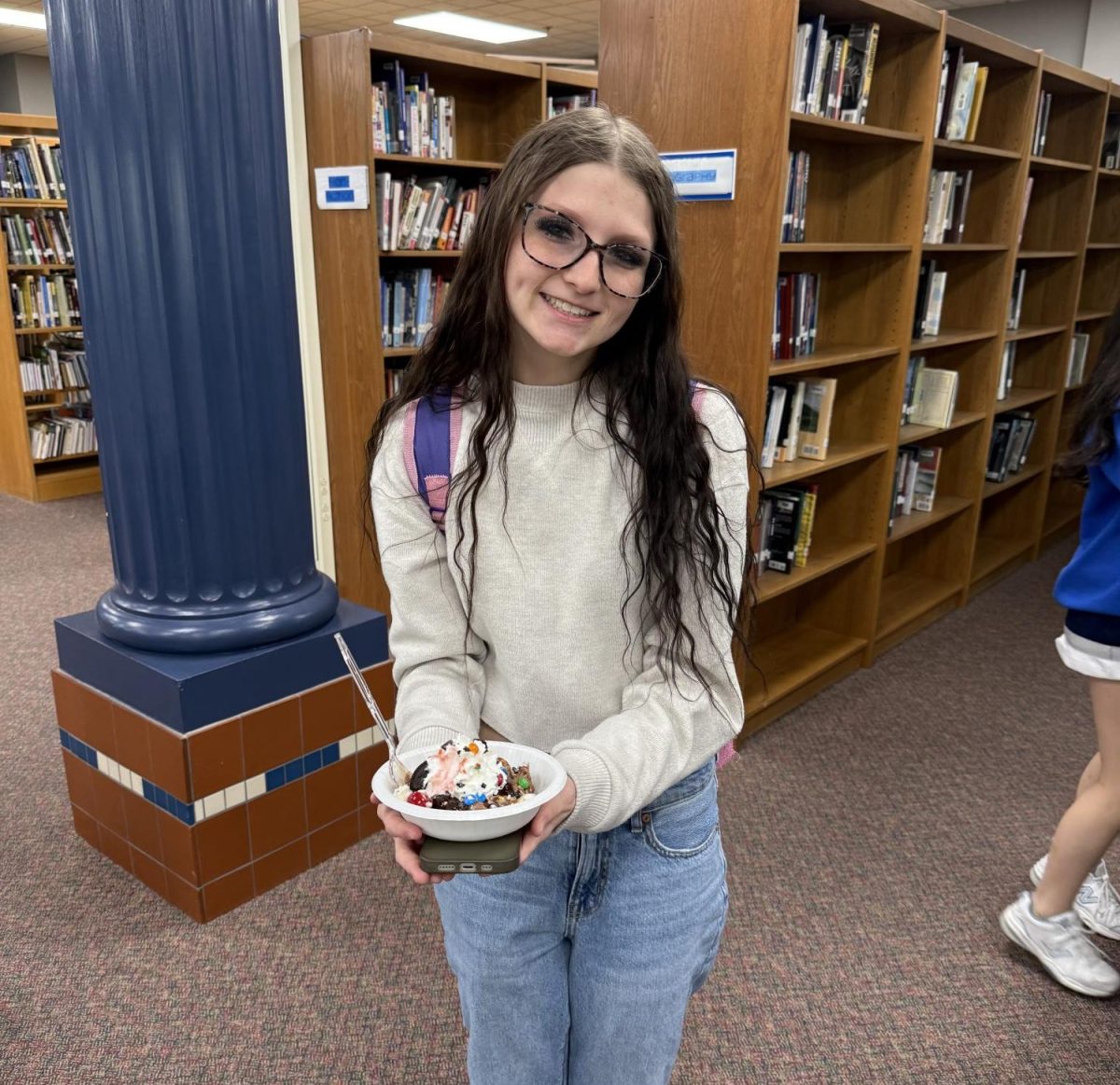
Students took the test on Feb. 10 in the library. The test started shortly after the bell rang. Andrew Russell was the administrator during the test. Each student sat at a different table with their chromebooks, a pair of headphones, and a piece of paper and a pencil. Students were allowed to take each section of the test in whichever order they desired.
For most students the Seal was an all day affair. Most finished during either the last block of the day or after school had ended.
“The French Seal of Biliteracy was very long and challenging, mostly just time consuming and draining,” senior Will Bourgeade said.
During the reading section of the Seal, students were given a small passage to read and then had to answer questions related to it. For the writing, students were asked to write random various things or ask questions in their second language. During the listening, students listened to a short clip and answered what the person in the audio was talking about. Finally, during the speaking section, students listened to questions through a short audio and answered in the language they’re being tested in. Required response times for each question get longer throughout the section.
The Seal of Biliteracy has many benefits for the students who take it and pass as well.
“The Seal of Biliteracy is important because it officially certifies that you speak two languages at graduation. When applying to universities or a job, it acts as a valuable credential,” said Schrader. “It sets you apart from other students who took foreign languages in school as a student that is really able to speak two languages.”