Warning: Spoilers Ahead!
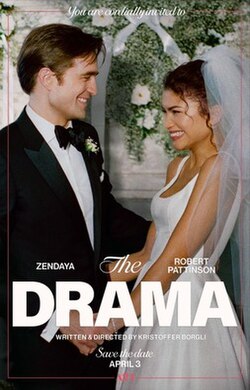
In “The Drama,” love comes with terms and conditions. When Zendaya’s character Emma is forced to reveal past internalized thoughts to her fiance, her marriage falls apart before it even starts.
Emma’s repressed thoughts from 10 years ago are condemned—which is understandable. At the same time Robert Pattison’s character Charlie actively responds to Emma’s past repressed thoughts by repressing his thoughts in regards to her past thoughts.
The movie is somewhat of a moral test, because at the same time as Emma reveals her past, a friend Rachel reveals some very disturbing past actions. After this, the friendship between those two characters has dissolved. This film exceeds with having the viewer internally debate whether the characters are bad individuals or just human.
The glimpses of young Emma in this film I find most significant. After Emma reveals her past repressed thoughts: a plan of a mass shooting that she later walked back, the film gives the viewer insights of Emma during that time.
During these glimpses of young Emma, we see the worst parts of her character and her changing. I find it quite disturbing how her character was portrayed as a teenage girl when she was planning this horrific attack. The glimpses of her filming threats on her computer, or the glimpses we see of her walking around the house with a firearm, reveal a deeper secret of bias embedded in the film. In these glimpses, young Emma is wearing protective hair styles and dark makeup. The dark makeup is clearly conveying to the audience that she is in a dark head space. Everything in films is intentional, especially in a film this deep—these intentional choices aren’t limited to hair and costume design. Young Emma’s clothes are intentional, portraying her ‘alternativeness’ as almost an indicator of the type of person who does something like this.
Additionally, in the difference of Emma’s hair throughout different parts of her life, I sense these changes may have an undertone of racism in them. Again, during the disturbing period of Emma’s life her portrayal is everything. During this time her hair was in braids, something we don’t see in her character now, or even in the past after she stopped planning a massacre. For the small glimpses we got as an audience, while Emma was actively planning this shooting as a young teenager, her hair was in braids.
Black American hair has always been a topic of discussion and has faced stereotypes that have been infused with racism. Everything used to portray young Emma during that time period was used to show her character’s disturbing and dark past—her clothes, her makeup, and her hair— when in reality none of these factors will ever contribute to any crime.
The movie almost presents the following: now that Emma is older and is no longer that ‘person’ she has straight hair, natural makeup, and a more feminine clothing style. As much as I enjoyed this film, I find this offensive, disturbing, and dangerous because of the gun violence crises we have in the United States. It enforces stereotypes about who commits acts of violence and ingrains these stereotypes into viewers’ minds, whether they realize it or not. This movie can be very harmful to members of society who already face stereotypes, and harmful to those who are ignorant to it–allowing them to subconsciously put people in categories that are a level of ‘threat’.
These aren’t the only hints of racism in the movie that have been widely unacknowledged. Additionally, the character Rachel, who was more than critical of Emma once her past was revealed, made microaggressions when talking about the topic of guns.
In one scene where Rachel was sitting with Charlie and her husband Mike, they are practically debating if Emma’s past thoughts and plans define who she is today. Rachel chimes in with something along the lines of ‘Mike grew up around a lot of guns and he would never plan something like that’. That was in fact not true, Mike rebuttals that one of his family members owned guns and he wasn’t even around them. After that, the scene felt heavy and awkward, and almost a bit of racial tension between Rachel and Mike. Rachel has successfully put an untrue racial stereotype on her husband, this time not creating stereotypes but using society’s stereotypes and putting them on the only other main character that is a person of color.
While this film shows the complexity of humans during a time in US history where violence is unfortunately very prevelant—which I find important— the film also enforces stereotypes around style, and racial stereotypes which is very unproductive and harmful.